Each November, Homelessness Awareness Month invites us to look beyond the stereotypes and stigma to understand the deeper causes and consequences of homelessness. It’s a time to recognize not only the growing numbers of unhoused individuals in our communities but also the complex web of factors, particularly mental health and substance use, that both contribute to and result from life without stable shelter.
The Root Causes of Homelessness
Homelessness doesn’t have a single cause. It’s the result of multiple, often intersecting issues such as economic, social, and personal, that can happen to anyone under the right (or wrong) circumstances.
Economic instability remains the leading driver. Job loss, stagnant wages, rising housing costs, and lack of affordable healthcare often leave people one paycheck away from losing their homes. A 2023 study found that in many U.S. cities, even full-time workers earning minimum wage cannot afford a one-bedroom apartment.
Lack of affordable housing compounds this issue. In many regions, there simply aren’t enough housing units available to meet demand, and waitlists for subsidized housing can stretch into years.
But economic factors alone don’t paint the full picture. Family breakdown, domestic violence, and systemic inequalities, including racism and the criminal justice system’s disproportionate targeting of marginalized communities, also funnel people into homelessness.
Mental Health: Cause and Consequence
The relationship between homelessness and mental illness is deeply intertwined.
Mental health issues like depression, bipolar disorder, PTSD, and schizophrenia can increase a person’s risk of becoming homeless. For those already vulnerable, whether due to trauma, abuse, or poverty, untreated mental illness can become the tipping point. When someone struggles with mental illness without access to support or treatment, it can impair their ability to maintain employment, manage relationships, or navigate social systems, ultimately increasing their risk of losing stable housing.
Once someone becomes homeless, their mental health often worsens. Living without shelter can be profoundly traumatic. Constant exposure to violence, sleep deprivation, stigma, and the stress of meeting basic needs creates a state of chronic stress that can exacerbate existing mental illnesses or trigger new ones. Without access to regular healthcare or medication, managing a mental health condition becomes nearly impossible.
It’s a vicious cycle: mental illness increases the risk of homelessness, and homelessness worsens mental health.
Substance Use: A Complex Relationship
Substance use and homelessness are also closely linked, though often misunderstood.
Contrary to popular belief, substance use is not always a cause of homelessness, it is often a coping mechanism. For many people, alcohol or drug use begins as a way to numb physical pain, trauma, or emotional distress, especially after becoming homeless. The streets are no place for healing, and substances can offer temporary relief from unbearable conditions.
However, addiction can make it harder to escape homelessness. It can lead to legal issues, make it more difficult to hold a job, and create barriers to accessing services or housing. Like mental illness, substance use becomes both a cause and a consequence of being unhoused.
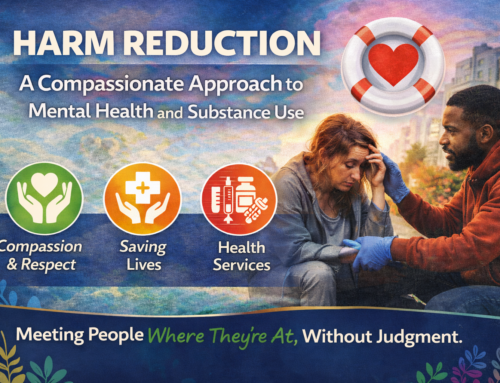
Treating addiction in the context of homelessness requires a compassionate, harm-reduction-based approach. Simply expecting someone to become sober before receiving housing or support often sets them up for failure. Programs that follow the “Housing First” model, which prioritize stable housing before requiring sobriety, have been shown to dramatically improve outcomes for people struggling with both homelessness and addiction.
Breaking the Stigma, Building Solutions
The stigma around mental illness, addiction, and homelessness too often leads to public policies that criminalize, rather than support, those in need. Sweeps of homeless encampments, bans on public sleeping, and lack of accessible treatment only deepen the crisis.
Instead, communities must focus on holistic, compassionate solutions:
- Expand access to affordable housing, including low-barrier shelters and permanent supportive housing.
- Invest in mental health care with trauma-informed approaches tailored to the unique needs of unhoused populations.
- Increase harm reduction services, including clean needle programs, mobile health clinics, and addiction treatment programs.
- Foster collaboration between housing agencies, healthcare providers, and community organizations to provide wraparound support.
A Call to Compassion
Homelessness is not a personal failure; it’s a societal one. And its solutions require empathy, evidence-based approaches, and a willingness to invest in people over punishment.
This Homelessness Awareness Month, take a moment to listen to the stories of those who are too often silenced. Volunteer, donate, advocate. Challenge stereotypes and support policies that treat housing and healthcare as human rights.
Because behind every statistic is a person. And everyone deserves a place to call home.