Over the past decade, conversations around mental health in the workplace have become more common and more visible. Companies now promote wellness initiatives, leaders speak openly about burnout, and organizations increasingly recognize the importance of employee well-being. On the surface, it may appear that the stigma surrounding mental health has significantly declined.
But for many professionals, especially those in executive and leadership roles, stigma has not disappeared. It has simply evolved.
Today’s workplace stigma is often quieter, more subtle, and harder to identify. Instead of openly dismissing mental health concerns, modern workplace culture may reward overwork, celebrate constant availability, and quietly question the capabilities of leaders who admit they are struggling. At the executive level, the pressure to appear composed, resilient, and high-performing can create an environment where mental health challenges remain hidden despite growing public awareness.
The Pressure Behind Leadership
Executives and senior leaders are often expected to be decision-makers, problem-solvers, and stabilizing forces during periods of uncertainty. They carry responsibility not only for organizational outcomes but also for team morale, financial performance, and long-term strategy.
This level of responsibility can contribute to:
- Chronic stress and emotional exhaustion
- Anxiety related to performance and accountability
- Difficulty disconnecting from work
- Isolation due to leadership roles
- Fear of appearing weak or incapable
While conversations about mental health have become more accepted in general workplace culture, executives often face an unspoken expectation to manage these struggles privately.
The message may not be stated directly, but it is often implied: leaders should be able to handle pressure without showing vulnerability.
How Stigma Has Changed
In the past, workplace stigma surrounding mental health was often obvious. Employees feared being labeled unstable, unreliable, or unfit for leadership. Today, stigma is more nuanced.
Executives may hear supportive messaging about wellness while simultaneously observing workplace cultures that reward burnout and nonstop productivity. Mental health may be publicly encouraged, but privately viewed as a risk to credibility or advancement.
Modern stigma can appear in subtle ways, such as:
- Assuming leaders who set boundaries are less committed
- Rewarding overwork as a sign of dedication
- Questioning resilience when executives take mental health leave
- Viewing emotional vulnerability as a leadership weakness
- Expecting leaders to support others while neglecting their own well-being
This creates a disconnect between organizational messaging and workplace reality.
The Hidden Cost of Silence
When executives feel unable to speak openly about stress or mental health challenges, the consequences can extend beyond the individual. Emotional strain that goes unaddressed can contribute to burnout, poor decision-making, disengagement, and even substance use as a coping mechanism.
Some leaders may turn to unhealthy habits to manage pressure, including:
- Overworking without rest
- Increased alcohol use to cope with stress
- Neglecting physical and emotional health
- Emotional withdrawal or isolation
Because executives are often viewed as high-functioning, these struggles may go unnoticed until they begin affecting health, relationships, or organizational performance.
Silence also affects workplace culture. Employees often take cues from leadership behavior. When leaders feel unable to model vulnerability or healthy boundaries, employees may feel pressure to hide their own struggles as well.
Redefining Strength in Leadership
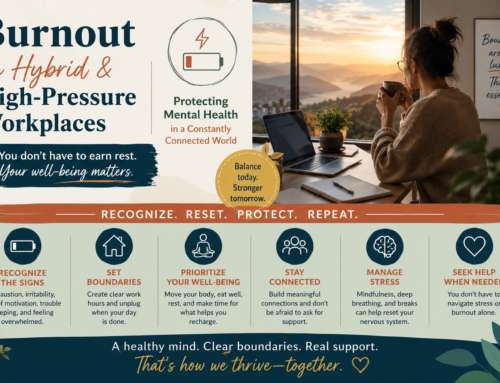
One of the most important shifts organizations can make is redefining what strong leadership looks like. Mental resilience does not mean ignoring emotional well-being. Effective leadership includes self-awareness, emotional intelligence, and the ability to seek support when needed.
Healthy leadership can look like:
- Setting realistic boundaries around work
- Taking time off when necessary
- Speaking openly about stress management
- Encouraging mental health conversations across teams
- Modeling balance and sustainable work habits
When leaders prioritize mental wellness, it helps normalize these behaviors throughout the organization.
Creating Cultures That Match the Message
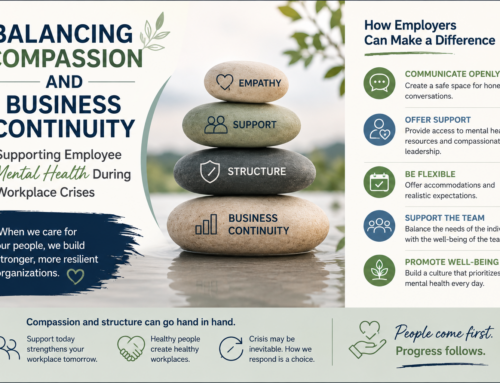
Many organizations have made meaningful progress in promoting mental health awareness, but awareness alone is not enough. Employees and executives alike need workplace cultures that truly support psychological well-being.
This means:
- Supporting leaders as well as employees
- Encouraging balance instead of glorifying burnout
- Providing confidential mental health resources
- Reducing stigma around therapy, coaching, or leave
- Evaluating workplace expectations that contribute to chronic stress
The goal should not simply be encouraging conversations about mental health. It should be creating environments where those conversations feel safe and supported at every level of leadership.
Moving Forward With Honesty and Humanity
Stigma surrounding mental health has changed, but it has not disappeared. At the executive level, it often exists behind polished professionalism, constant productivity, and silent pressure to perform.
Addressing this reality requires honesty, cultural change, and leadership that values people as much as performance. Organizations that support the mental well-being of their leaders create healthier, more sustainable workplaces for everyone.
True progress happens when mental health support is not just encouraged in theory, but fully accepted in practice.